How to Progress in Pilates: 7 Ways to Get Better Results
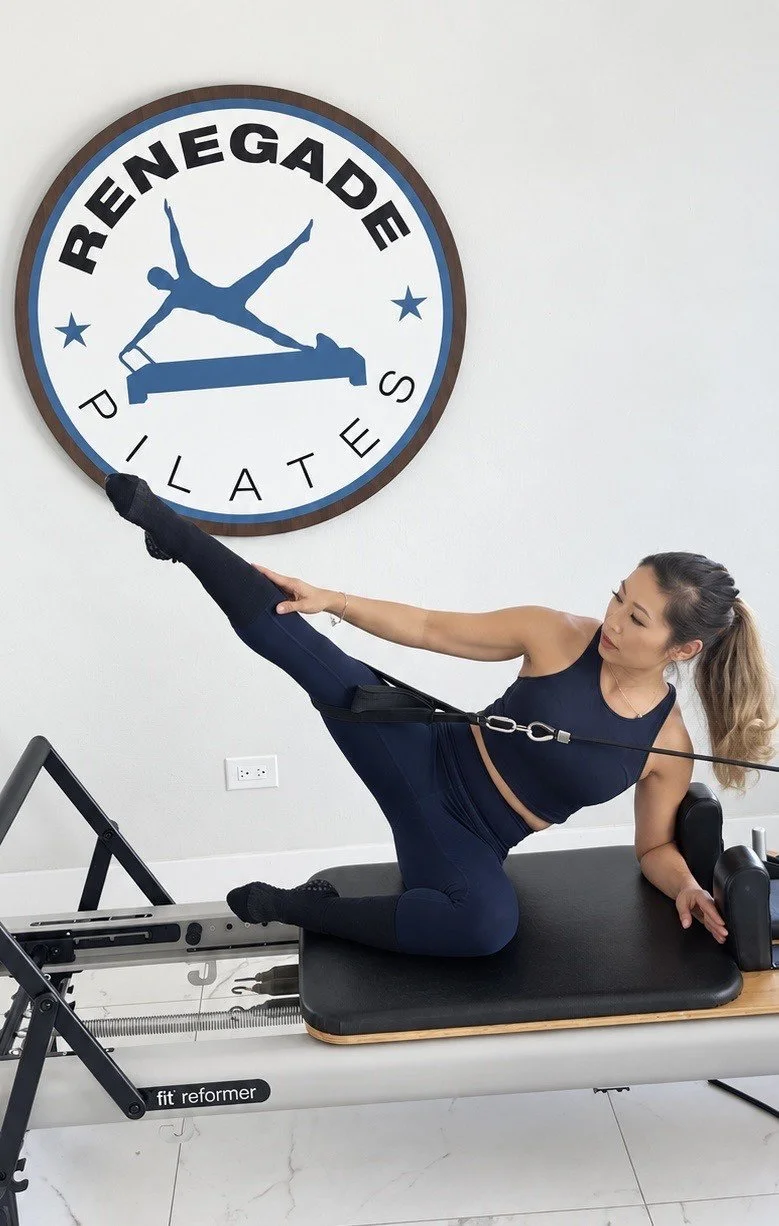
7 Ways to Make More Progress in Your Pilates Practice
Whether you practice Pilates several times a week, once a week, or whenever life allows, there’s a good chance you’d like to get more from the time you spend doing it.
But what does progress in Pilates actually look like?
It isn’t simply moving on to more advanced exercises or adding more resistance. Progress might mean feeling stronger, moving with greater control, improving your flexibility or balance, returning to an activity you love, or simply feeling more confident in your body.
And often, getting better results doesn’t require working harder. It means practicing more consistently and intentionally—and making sure your Pilates practice is actually supporting your goals.
Here are seven ways to get more from it.
1. Know What You Want Pilates to Do for You
Before you can measure progress, it helps to know what you’re working toward.
Do you want to build strength? Improve flexibility? Reduce back discomfort? Rebuild strength after an injury or surgery? Improve your golf or tennis game? Feel steadier on your feet? Or finally master an exercise that has challenged you for years?
There is no single definition of progress in Pilates.
And your goals can change. What brought you to Pilates five years ago may not be what your body needs from it today.
Ask yourself: What would I like Pilates to help me do better three or six months from now?
The clearer the goal, the more purposeful your practice can become.
2. Make Sure Your Teacher Knows You—and Your Goals
Good Pilates instruction should involve more than learning your name and remembering which springs you usually use.
Does your teacher know what you’re trying to accomplish? Do they know about your injuries, previous surgeries or conditions that may affect how you move? Do they know what bothers you—or what has recently started feeling better?
Just as importantly, is there an opportunity to communicate when something changes?
A quick “My shoulder has been bothering me this week,” “My back is feeling much better,” or “I don’t feel this exercise where I think I should” can give an instructor valuable information.
That information can influence an exercise choice, resistance, range of motion or modification.
Your body isn’t exactly the same every time you walk into the studio. Good instruction recognizes that.
If you’re evaluating a class or studio, we take a deeper look at what individualized Pilates instruction should actually look like in
How to Choose the Right Pilates Classes.
3. Choose the Right Starting Point—and Build From There
A modification isn’t a failure to do the “real” exercise.
Often, it’s the smartest way to get there.
The right modification gives you an appropriate starting point from which to develop strength, mobility, coordination and control. A progression gives you somewhere to go once you’re ready.
A smaller range of motion performed with excellent control may be far more productive than a larger range your body can’t yet stabilize. A supported variation may help you develop the strength necessary to eventually perform the unsupported version correctly.
And different people in the same class may need different versions of the same movement.
The goal isn’t to perform the most advanced version of an exercise. The goal is to build the strength and control to earn the progression.
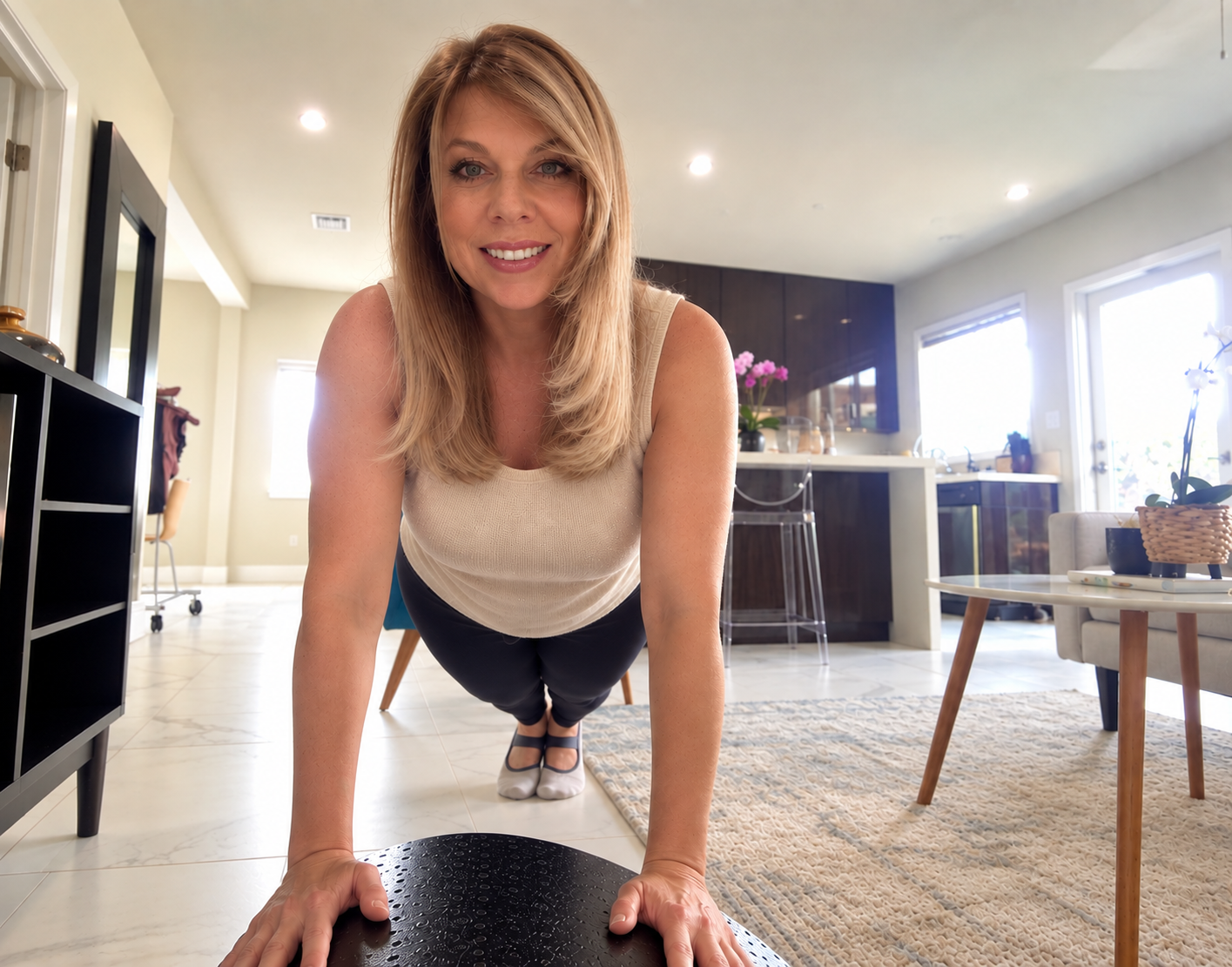
4. Strengthen Your Mind-Body Connection
One of the most powerful aspects of Pilates is also one of the easiest to overlook: the mind-body connection.
Pilates isn’t simply about moving from point A to point B.
Where is the movement coming from? What are you trying to stabilize? Which muscles are doing the work? Are you controlling the movement in both directions?
And what is your breath doing?
Breathing is part of the movement, not something separate from it. Your breath can help create rhythm, support abdominal engagement, encourage movement through the rib cage and reduce unnecessary tension.
If you find yourself holding your breath whenever an exercise becomes challenging, you’re certainly not alone. Learning to coordinate your breathing with movement can change the way an exercise feels—and the way you perform it.
On the reformer, for example, it can be tempting to focus entirely on pushing the carriage away and then allow the springs to bring you back. Instead, notice your breath, alignment and control throughout the entire movement. The return is part of the exercise, too.
Two people can perform an exercise that looks nearly identical from across the room and experience it very differently.
The more aware you become of how you breathe, where you initiate movement, what you stabilize and how you control the movement from beginning to end, the more you can get from every repetition.
5. Slow Down and Pay Attention
Pilates rewards control.
When movements become too fast, momentum can begin doing work your muscles should be doing. Alignment can change, transitions become less precise, and sometimes the most valuable part of the exercise disappears altogether.
But slowing down doesn’t apply only to the exercises.
Do you arrive just as class begins and race out as soon as it ends?
Those few minutes before and after class can be useful. They’re an opportunity to tell your teacher that something has changed, ask about an exercise that didn’t feel quite right, or mention a goal you’d like to work toward.
You don’t need a lengthy conversation every time you take a class. But communication helps your instructor teach the person who walked into the studio that day—not simply the name on the class roster.
6. Remember That “Harder” Doesn’t Always Mean “Better”
More resistance. More repetitions. A bigger range of motion. More complicated choreography.
None automatically equals progress.
Sometimes Pilates actually becomes more challenging when resistance is reduced because you have less assistance from the equipment and must create more stability yourself.
Sometimes a smaller range allows you to maintain better alignment. And sometimes returning to a fundamental exercise exposes something that a more complicated version was allowing you to compensate for.
Progression should have a purpose.
The next step might be more resistance, greater range or increased complexity. But it might also be less resistance, a smaller movement, a slower tempo or simply performing a familiar exercise with greater precision.
Advanced Pilates isn’t just about doing more advanced exercises. It’s about having greater command of your body.
7. Build Consistency—and Continuity
Bodies adapt through consistency.
An occasional challenging Pilates class can certainly feel good, but strength, mobility, coordination and new movement patterns develop through repetition over time.
There’s also another type of consistency that can make a difference: continuity.
Trying different studios, teachers and styles can be fun, and there can be real value in experiencing different approaches to Pilates. But if you’re constantly studio hopping, it can be difficult for any one instructor to learn your movement patterns, recognize changes, remember your limitations and know when you’re ready to progress.
You may find yourself repeatedly starting over as each new teacher gets to know your body—and you get to know their teaching style.
That doesn’t mean you need to practice with only one instructor or at only one studio. But if meaningful progression is your goal, having some consistency in who teaches you and how your progress is followed can be valuable.
Consistency also doesn’t mean repeating the same workout indefinitely.
As your body changes, your practice should evolve with it. That might mean changing resistance, increasing range of motion, improving stability, introducing a progression, slowing an exercise down or approaching a familiar movement in a new way.
Wondering how frequently you should practice? Read
How Often Should You Do Pilates? for a closer look at finding a frequency that supports your goals.
What Does Progress Look Like for You?
Maybe you’re using more resistance than you were six months ago. But perhaps you’re also standing taller, controlling movements that once felt shaky, getting off the floor more easily, reaching farther without compensation, feeling stronger in your everyday life—or finally understanding how to engage muscles you couldn’t even identify when you started.
Those things are progress, too.
Pilates was never meant to be a race toward increasingly complicated exercises. At its best, it helps you develop greater strength, awareness, efficiency and control—and then continue building on them.
Because every body comes with a different history, every person’s path through Pilates will look a little different.
The client sets the goal. Pilates is the tool. The teacher is the guide.
Ready to Make More Progress?
Whether you’re new to Pilates, returning after some time away, or looking for a more thoughtful approach to your current practice, the right starting point depends on you—your body, your experience and what you want to accomplish.
At Renegade Pilates, we use modifications, progressions and individualized instruction to help each client work from an appropriate starting point and continue moving forward.
Or continue exploring Pilates, movement and practical advice on the
Come discover what you can do. If you’ve been away, let this be your invitation back.